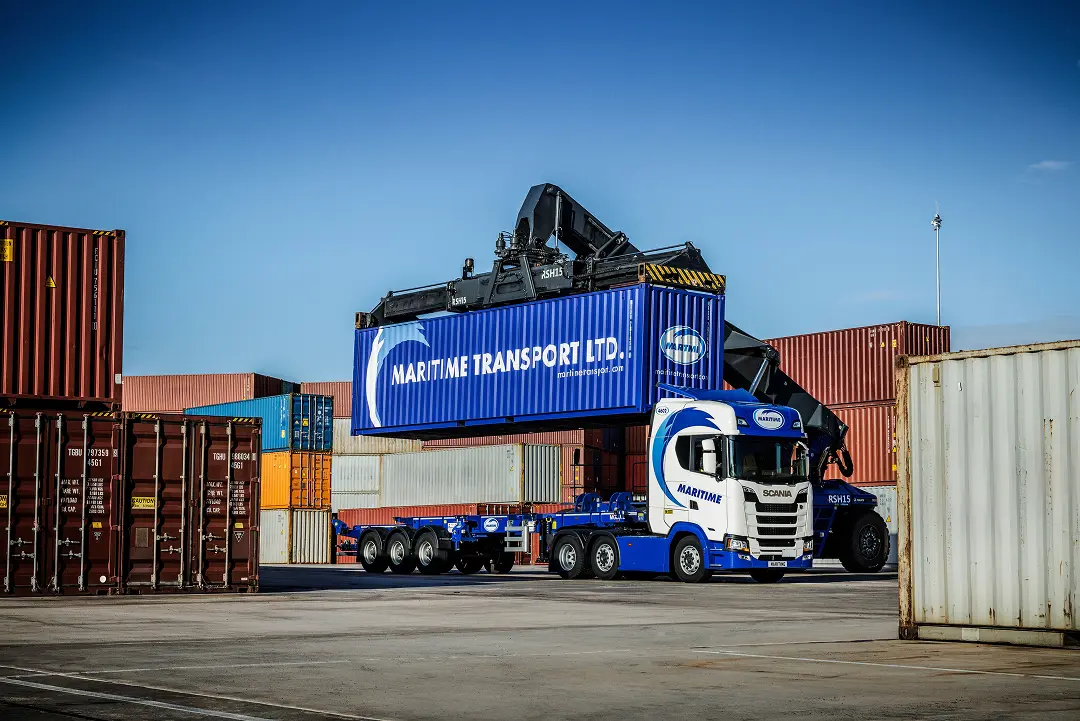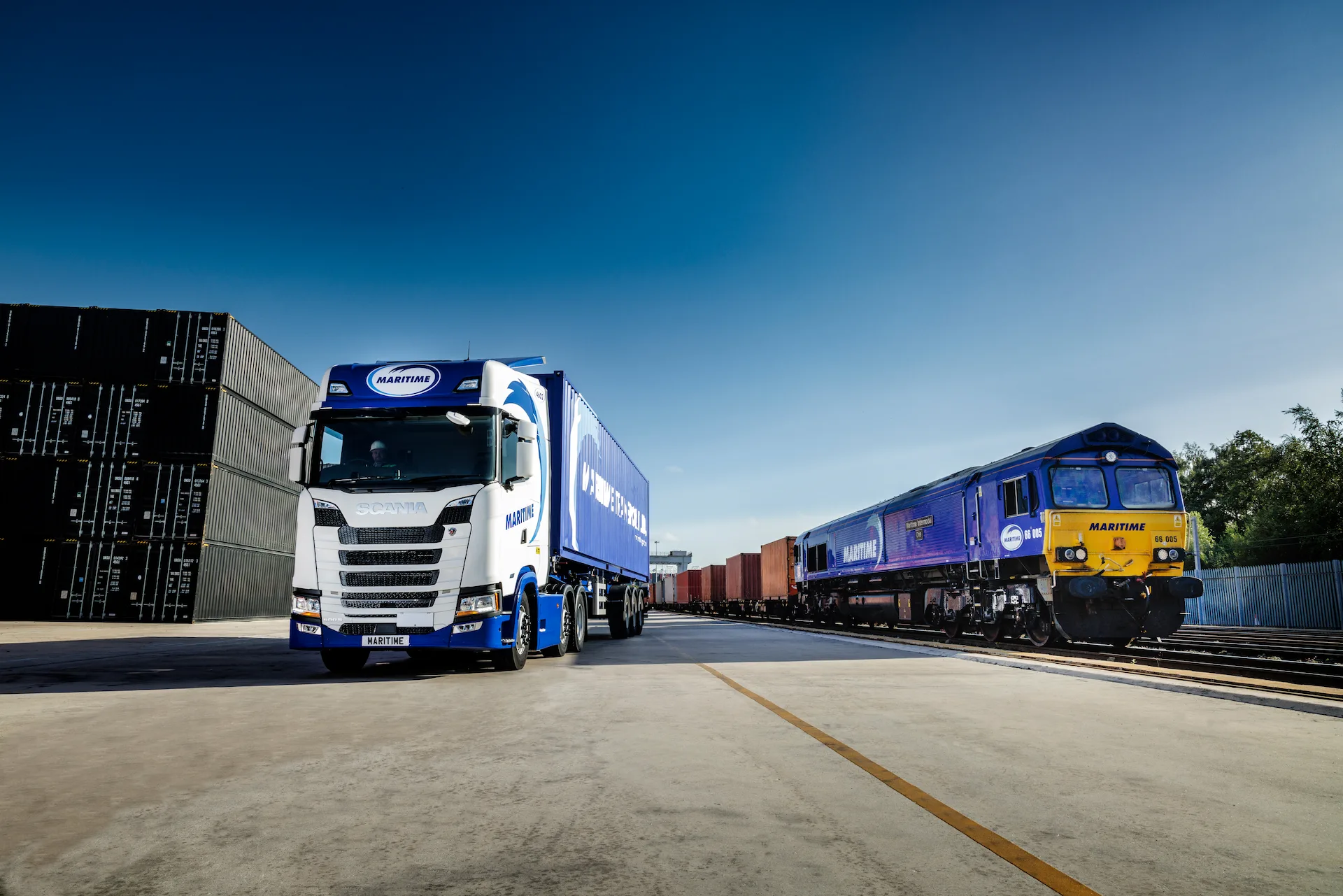
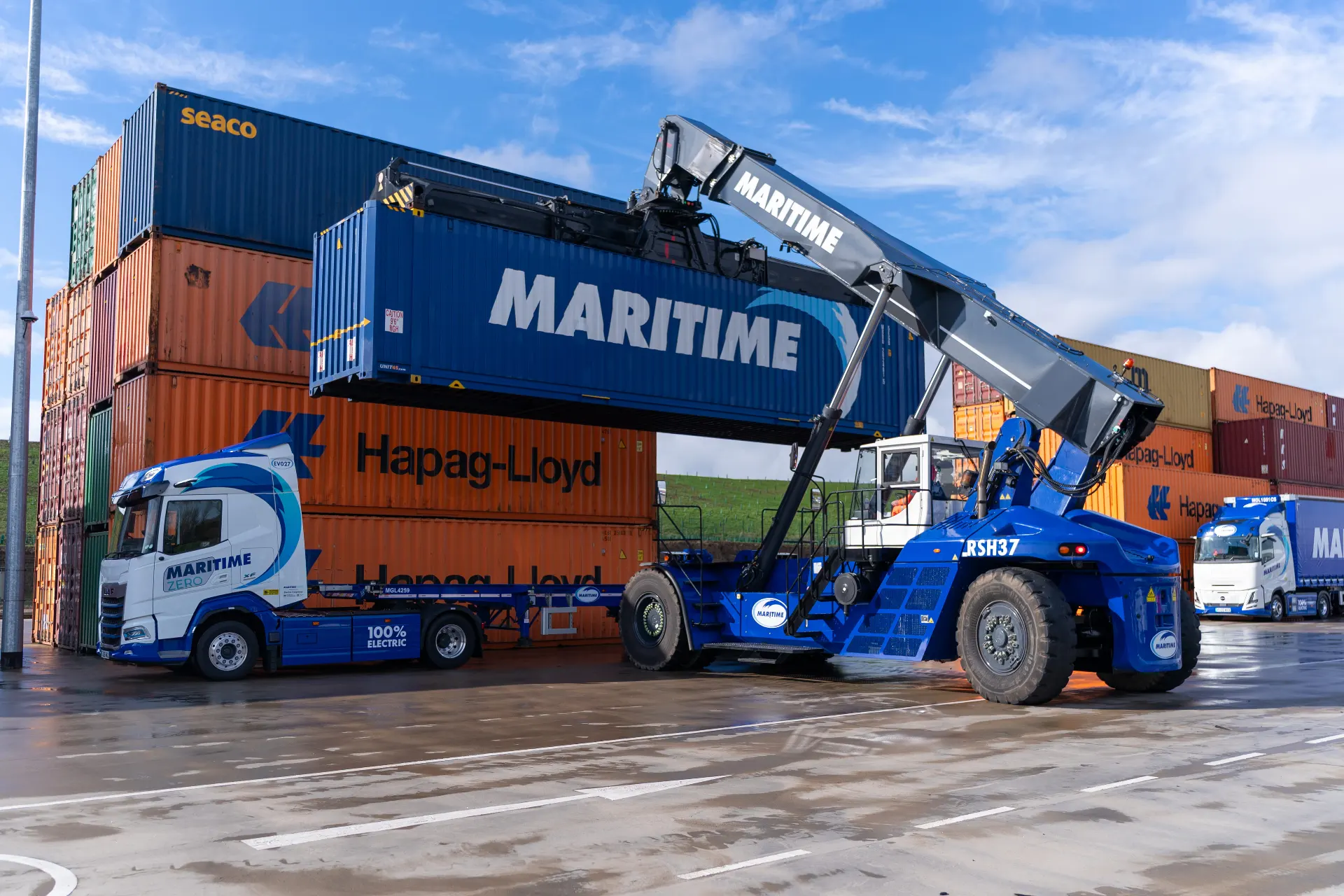
Maritime Transport has begun the nationwide deployment of its electric heavy goods vehicle (eHGV) fleet, backed by a major investment in high-powered charging infrastructure, as part of its long-term strategy to decarbonise road freight and build the cleanest, most sustainable full-load supply chain in the country.
19 eHGVs have entered service at sites in Wakefield and Birmingham, with a total of 56 vehicles being introduced across 13 transport depots and rail-connected terminals during 2026. Deployed in phases, Maritime’s electric fleet is expected to achieve ranges of between 300 and 500 kilometres per charge depending on duty cycle, making it well suited to a wide range of regional operations.
To meet energy demand, Maritime is developing one of the UK’s largest independent charging networks for eHGVs with more than 22MW of installed power once complete, enough to charge over 100 eHGVs simultaneously. Powered entirely by renewable electricity, Maritime’s charging network will also be accessible to third-party operators, helping unlock wider adoption of eHGVs across the sector.
The rollout forms part of the government-backed Zero Emission HGV and Infrastructure Demonstrator (ZEHID) programme, funded by the Department for Transport and delivered in partnership with Innovate UK. As a lead partner across all three ZEHID projects: ZENFreight, Electric Freightway, and eFREIGHT 2030, Maritime is demonstrating how zero-emission trucks and charging infrastructure can operate effectively within a live logistics environment, while generating critical data to inform future investment and policy.
The first phase commenced at Maritime’s transport depot in Wakefield, where nine Mercedes-Benz eActros 600 vehicles arrived in January through ZENFreight. Six dedicated charging stations, delivered in partnership with VEV, are now in place on site, each with outputs of up to 400 kW and capable of charging a 40-tonne truck from 20% to 80% in under an hour. Now in use across both container transport and curtainsided distribution, the vehicles are providing early insight across a range of operating conditions. ZENFreight, led by Dynamon, will see Maritime bring in 18 eHGVs and charging points across Wakefield, Doncaster iPort, and London Distribution Park in Tilbury. The project is comparing diesel, battery-electric, and hydrogen HGVs on live routes to assess vehicle performance, energy use and infrastructure needs.
The rollout expanded to the Midlands in March, with four Volvo Aero and six DAF XF eHGVs entering service at Birmingham Rail Freight Terminal through Electric Freightway. Five charging stations, installed by project lead GRIDSERVE, have been added at the site, each with outputs of up to 360 kW. Across the Electric Freightway project, Maritime will operate 20 eHGVs from Birmingham Rail Freight Terminal and its transport depot in Manchester, alongside 10 charging stations. Backed by more than £100 million of government and industry investment, Electric Freightway is creating one of the UK’s largest and most advanced charging networks for eHGVs.
A further 18 vehicles will follow through eFREIGHT 2030, led by Voltempo, across five Maritime locations, including its Strategic Rail Freight Interchange at SEGRO Logistics Park Northampton. This phase will also introduce five hyperchargers capable of delivering up to 1MW, with infrastructure already under development ahead of the vehicles arriving.
Several of these locations, including London Distribution Park, Manchester, and Doncaster iPort, are expected to go live from April, subject to grid connection. Additional charging infrastructure is also being installed at Avonmouth and Maritime’s Strategic Rail Freight Interchange at East Midlands Gateway through the UK Government’s Depot Charging Scheme.
Deployment is being delivered through Maritime ZERO, the company’s dedicated zero-emission road transport division, launched in 2025. ZERO uses a hub-and-spoke model integrating long-distance rail with eHGVs completing onward journeys from inland terminals and port locations. This approach leverages Maritime’s wider intermodal network of more than 40 daily rail services connecting major deep-sea ports with nine open-access inland terminals. By integrating rail and electric road transport, the model maximises vehicle utilisation while reducing emissions across the entire logistics journey.
Tom Williams, Deputy Chief Executive Officer, Maritime Transport: ‘Bringing our first eHGVs into operation, together with the charging infrastructure behind them, is a really important milestone for Maritime and the result of a huge collaborative effort across our business and with our partners. Through ZEHID, we have an opportunity to learn quickly from how these vehicles perform and help build the knowledge, evidence, and operational confidence needed to bring zero-emission HGVs into the mainstream. It’s also encouraging to see growing demand, with a number of customers already working with us to incorporate these vehicles into their operations and assess how they can support their own decarbonisation plans. I’d like to thank everyone across Maritime and our partner organisations who has contributed to this milestone.’
Simon Buckley, Knowledge Transfer Manager for Zero Emission Mobility, Innovate UK: ‘Maritime’s investment in eHGVs and charging infrastructure is an important step forward for the UK logistics sector, and through ZEHID is helping show how zero-emission road freight can begin to be integrated into real-world operations. It also underlines the importance of combining vehicle deployment with the right infrastructure and operational planning if this technology is to move into more widespread use. By working through these challenges, Maritime is helping build the knowledge the industry will need in the years ahead, and Innovate UK is pleased to support this important work as the sector continues to decarbonise.’
Maritime’s sustainability strategy combines increased use of rail freight, alternative fuels, smarter route planning to reduce empty mileage, and zero-emission vehicles where commercially viable. In 2022, the company committed to the Science Based Targets initiative (SBTi), targeting a 58.8% reduction in absolute Scope 1 and 2 greenhouse gas emissions by 2034.