Scroll back to top

SUSTAINABILITY AT MARITIME TRANSPORT

A comprehensive, science-based approach to reducing greenhouse gas emissions across our operations.

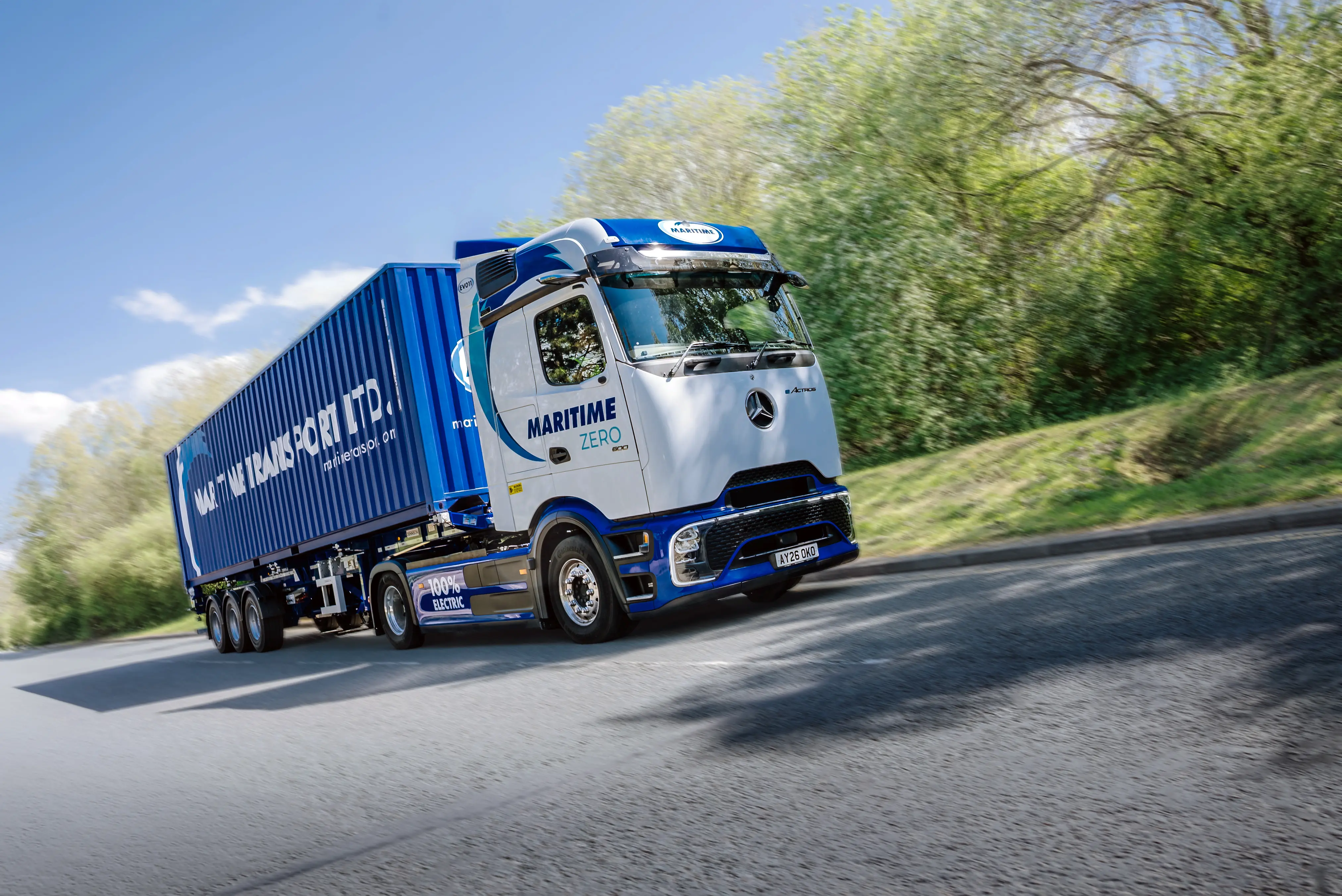
Three Maritime Transport eHGVs in front of a Maritime Transport depot.

Maritime plays a critical role in logistics, providing integrated road, rail freight, and container terminal services that drive trade across the UK economy. As a national operator, we recognise our responsibility for how these services are delivered and their environmental impact. Sustainability is therefore embedded in how we run our business.

We are committed to operating responsibly and reducing greenhouse gas emissions across our operations, while supporting our customers to manage and reduce the carbon impact of their supply chains. This is achieved through greater use of rail freight, adoption of alternative fuels like Hydrotreated Vegetable Oil (HVO) fuel, deploying eHGVs alongside purpose-built charging infrastructure, and smarter, more efficient route planning, all applied within live, day-to-day operations.

The logistics sector is complex, and decarbonisation cannot be delivered by a single technology or organisation. Progress depends on collaboration across the supply chain. We work closely with our customers, partners, equipment manufacturers, infrastructure providers, and government to develop solutions that can be implemented today and adopted more widely over time.

Alongside transport emissions, our sustainability approach also considers energy use and land management at our sites, support for our people and local communities, and strong governance as the business continues to grow.

‍Science Based Targets initiative

In 2022, we joined the Science Based Targets initiative (SBTi), an independent global organisation that helps businesses set emissions reduction targets grounded in climate science. SBTi provides a recognised method for companies to define how, and how quickly, emissions must be reduced in order to limit global temperature rise and support the transition to a net-zero economy.

2034 PATHWAY

Our Near-Term TargeT

Near-term targets set out how emissions will be reduced over a defined period, typically five to ten years, and form the foundation of any credible net-zero strategy. We have committed to reduce absolute Scope 1 and 2 greenhouse gas emissions by 58.8% by 2034, using 2022 as the base year. This target aligns with the SBTi’s 1.5°C pathway and sets a clear level of reduction across our national operations. Emissions data from 2023 and 2024 shows progress in line with the reduction pathway required to meet this commitment. Our SBTi commitment provides a clear, science-led framework for tracking progress, guiding investment and supporting long-term decarbonisation across the Maritime network. It also gives customers and stakeholders confidence that our targets are independently benchmarked against recognised global standards. You can view our near-term commitment on the SBTi Target Dashboard, which lists organisations that have set, or committed to setting, science-based targets.

2050 PATHWAY

our net zero commitment

We are committed to achieving net zero greenhouse gas emissions across Scope 1, 2, and 3 by 2050, in line with the UK’s net zero target and the IPCC’s carbon reduction pathway. Our emissions reduction pathway is based on a 2022 baseline, representing the first full year of Scope 1, Scope 2, and Scope 3 reporting across our operations. This provides a consistent reference point against which progress is measured. We track performance annually against a defined pathway towards net zero. As carbon reduction projects are implemented and new technologies are introduced, this is refined to reflect operational performance, ensuring our approach remains both credible and achievable. We measure emissions in detail across all scopes and monitor year-on-year changes to understand where reductions are being achieved and where further action is required. A summary of our reported greenhouse gas emissions and intensity ratios is available in the company documents section of our website.

our strategy

Reducing emissions from road freight is one of the most complex challenges facing the logistics sector. While HGVs represent a relatively small proportion of vehicles on the road, they account for a disproportionately high share of transport-related emissions. Addressing this challenge requires solutions that work across different journey types, commodities, and operating conditions. What is effective for long distances may not be suitable for first and final miles. Our approach is therefore built around practical, deliverable measures that can be applied within live logistics operations today, while also supporting the transition to lower and zero-carbon technologies and infrastructure over time.

Close up of Maritime ZERO logo on an eHGV cab.

Our sustainability strategy is built around three clear areas of focus.

Optimisation

Optimisation delivers immediate emissions reductions by making smarter use of our existing assets and infrastructure. By reducing avoidable miles, empty running, and unnecessary handling, we improve both carbon performance and operational efficiency.

Key areas of focus:

  • Improving load and trailer utilisation to reduce empty and part-loaded movements.
  • Allocating containers to rail services that bring them closest to their end destination, reducing onward road mileage and journey emissions.
  • Using centralised planning systems and network-wide data to plan terminal activity in advance and minimise rehandling.
  • Managing terminal activity dynamically to make efficient use of different types of plant and reduce unnecessary container moves and travel distances on site.

Modal Shift

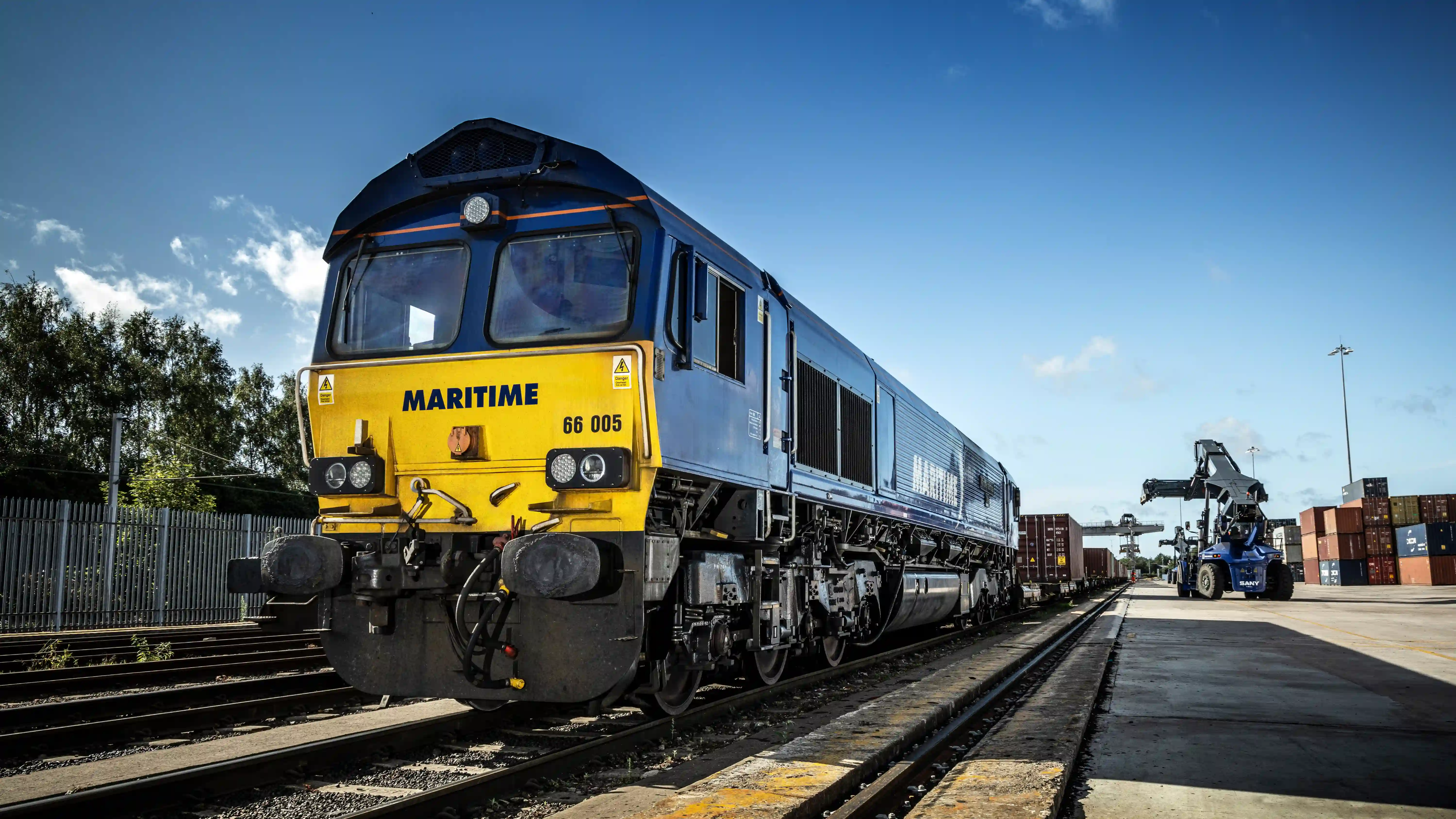
Shifting freight from road to rail is one of the most effective ways to reduce emissions from long-distance transport. Rail produces significantly lower carbon emissions per tonne moved than road haulage, while also easing congestion and improving network resilience.

Rail is not suitable for every journey, and capacity constraints across the UK network limit what is possible in the short term. Since launching our rail division in 2019, we have invested heavily to help overcome these barriers and make rail a more viable option for supply chains through expanded services, new and regenerated inland terminals, and increased handling and storage capacity.

Today, rail carries more than 25% of our container volumes, up from just 6% in 2019. This growth is supported by more than 50 daily services connecting major UK ports with inland markets through a growing network of open-access, multi-user rail freight terminals. In 2025 alone, these services generated 26,968 tonnes of CO2e across 3,408 journeys. Had these volumes moved entirely by road, emissions would have been 50,243 tonnes, demonstrating the emissions benefits of a well-integrated rail freight network. Modal shift is most effective when delivered as part of an end-to-end logistics solution. By combining rail freight with lower and zero emission vehicles for first and final miles, we reduce emissions across the full journey.

Key areas of focus:

  • Replacing suitable long-distance road journeys with rail to reduce emissions and congestion.
  • Investing in new open-access, multi-user rail terminals to increase national rail capacity and geographic coverage.
  • Expanding and regenerating existing rail terminals to accommodate longer, heavier trains.
  • Developing new rail paths and increasing service frequency on port-to-inland and inland-to-inland routes.
  • Developing domestic rail services for palletised and packaged goods.
  • Operating a national container handling fleet to keep terminal operations efficient and enable higher rail utilisation.
  • Integrating rail with dedicated first and final-mile road operations, including eHGVs.

Alternative Fuels

There is no single solution for decarbonising road freight. Our operations span a wide range of journey types, payloads, and delivery environments, each with different energy and infrastructure requirements.

We apply the most appropriate lower-emission solution to each application – using eHGVs where electric operation is viable, and HVO fuel where electrification is not yet the best operational fit.

Key areas of focus:

  • Deploying eHGVs on suitable first and final-mile, regional, and repeatable routes.
  • Developing a national high-powered charging network to support zero-emission road transport at scale.
  • Integrating eHGVs with rail services to reduce emissions across end-to-end journeys.
  • Using HVO across road transport to reduce emissions where diesel-powered HGVs remain in use.
  • Participating in industry and government-backed schemes to trial and evaluate eHGVs and charging infrastructure in live operations.
  • Sharing operational insight with trade bodies and government to help inform future policy, infrastructure, and investment.
  • Providing journey-level emissions reporting for container movements across road and rail to give customers clear visibility of carbon impact.

our journey so far

Sustainability has long been part of how we operate. Since launching our rail division in 2019, sustainability activity has accelerated through investment in rail capacity, terminals, lower-emission fuels, and zero-emission road transport. View our sustainability timeline, or for more on Maritime’s growth, investment, and expansion over the years, visit our History page.

Six Maritime ZERO electric vehicles next to chargers.

Emissions Reporting

Accurate data is essential to understanding and reducing carbon impact. Our emissions reporting framework captures emissions for every container journey we complete, across rail, diesel HGV, and eHGV movements.

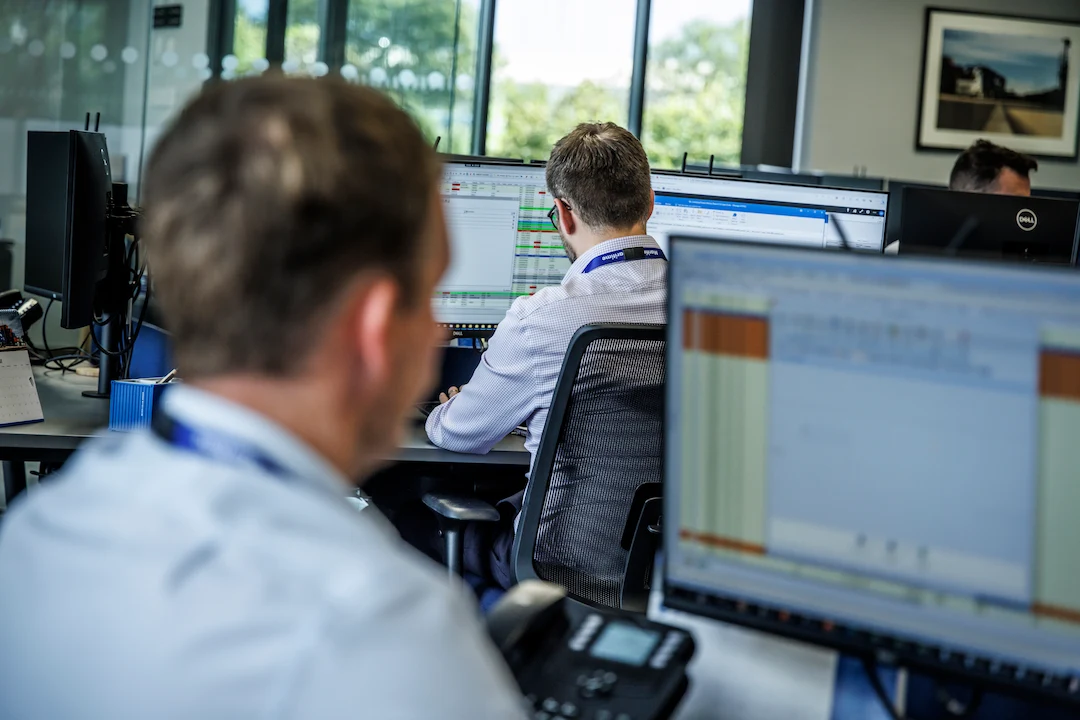
Built in-house and fully integrated with our transport management system, TOPS, our reporting framework provides a clear, transparent view of emissions from collection to delivery, helping businesses of all sizes meet reporting requirements and make more sustainable transport decisions.

Built to Recognised Industry Standards

Reporting is aligned with the Global Logistics Emissions Council (GLEC) Framework and is based on actual routes, vehicle types, load weights, and transport modes.

What Our Reporting Delivers

  • Emissions calculated for every container journey, end to end.
  • Breakdown by journey stage and transport mode.
  • Automatic data capture through full integration with TOPS, with no manual input.
  • Future-ready reporting that incorporates low and zero-emission technologies.
  • Clear support for Scope 3 reporting, providing auditable, verifiable emissions data.
  • Regular carbon statements to track performance and progress over time.

By clearly showing where emissions occur, our reporting tool can identify opportunities to reduce carbon impact, whether through shifting more freight to rail, using eHGVs, or optimising routes and journey planning.

FREQUENTLY ASKED QUESTIONS

Questions about Maritime Transport?

Got a question?

speak to our team

We will respond as soon as possible.